
Keep a color recipe for a series of pages
Record the sequence, purpose, and placement of your colors so you can continue a series without relying on memory.
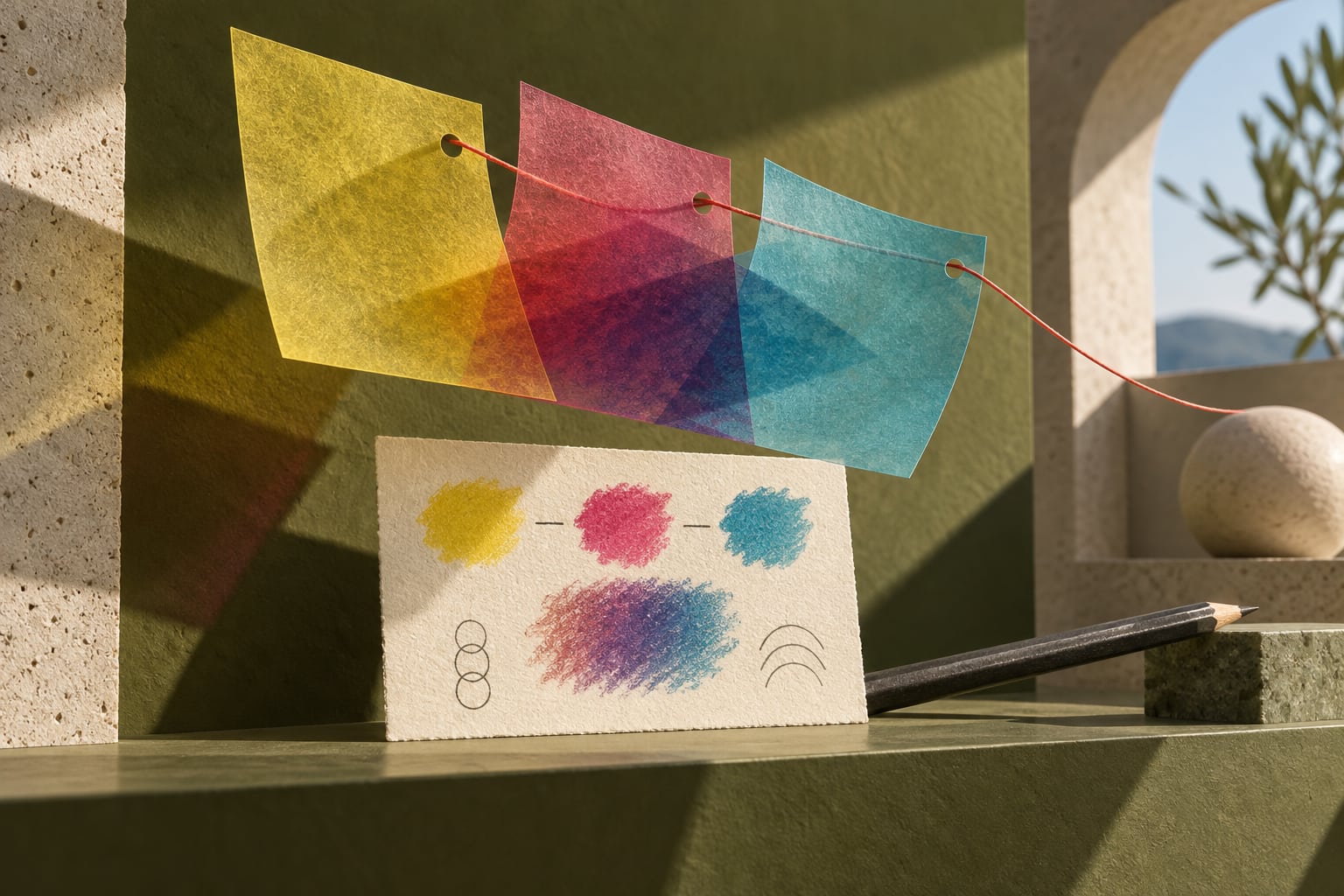
A color recipe records which materials you used, in what order, and on which parts of a picture. If you are coloring a series of related pages, those notes help you recover a particular decision when you return to the book. Record what you will need to remember without documenting every movement of your hand.
A pencil list answers only part of the question. “Green, blue, and cream” does not tell you which was the base, where you placed the shadow, or which area stayed uncovered. A useful recipe describes the relationship between those colors and the result you want to repeat.
Save one decision rather than the whole session
Choose an element that will appear again: leaves, frames, a character's clothes, or a background. Give it a recognizable name such as “blue-green leaves for this series.” Record the book and page containing your example. For loose drawings, use a title that will help you locate the right piece.
Include the brand and number when available. If a pencil has no readable identification, give it your own label and keep a small sample beside the note. The important thing is being able to find that same material next time.
What to include in the recipe
- Purpose: which part of the illustration uses this combination.
- Sequence: the first color, the next layer, and the final accent, if there was one.
- Application: use observable instructions such as “light base” or “dark only beside the vein.”
- Reserved areas: note which edge or gap remained uncolored.
- Next step: leave one sentence explaining where you intend to continue.
An example with repeating leaves
Your note might read: “Green A as a light base; blue B beside the lower vein; cream C near the upper edge; keep a thin line of paper visible. Next session: repeat on the two leaves at the right.” These are example labels; replace them with your actual materials.
When you return, first look at the reference page. Try the recorded sequence briefly and compare it with the earlier result. The note guides you but cannot guarantee an exact match if the paper or your application changes. Adjust one variable at a time and record only a change you decide to keep.
Mistakes that make a recipe less useful
- Writing only color names: add their sequence and purpose.
- Using vague instructions such as “make it pretty”: describe a place or action.
- Changing a recipe without dating the variation: identify the version you want to repeat.
- Turning the record into a lengthy obligation: a few lines beside the example are often enough.
A common question
Does a recipe mean the whole series must look alike?
No. You can keep the leaves consistent and change the flowers, or retain the sequence with different colors. Label the variation so you can choose between versions later. The record helps you recover options while leaving room for new decisions.
If you are still exploring the materials, start with how to use a color test. Once you find a combination worth repeating, add your recipe. This note-taking method is an original editorial suggestion from Equipo Chroma Shu.


Be the first person to leave a little trace of color here.