
Rain and reflections on an illustrated path
Try broken reflections beneath a light and a few rain marks to give an illustrated path a wet appearance.
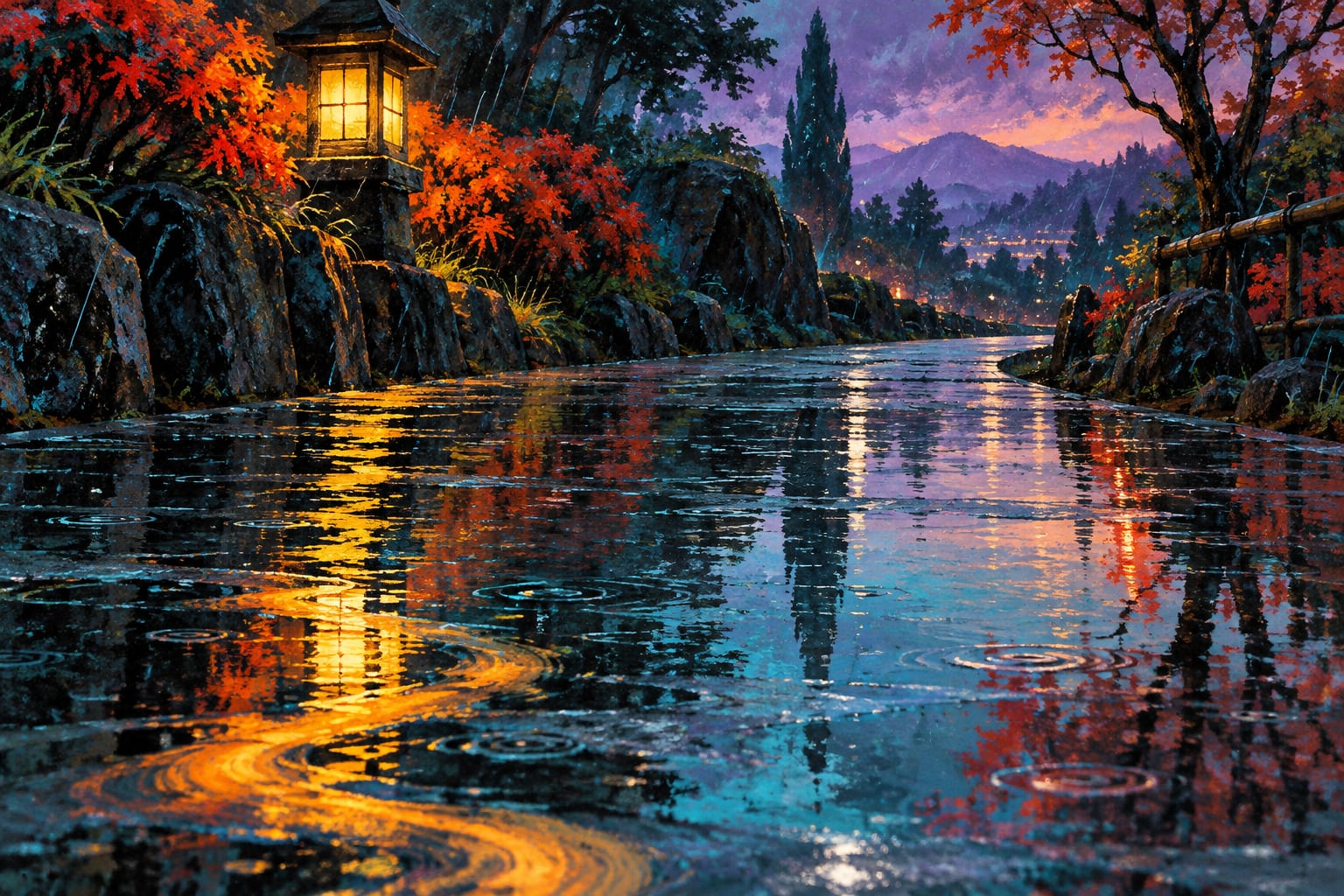
To suggest a wet path, try repeating selected colors beneath their sources and breaking those repetitions with small horizontal marks. Add a few rain lines afterward. This is a graphic exercise for an invented scene; actual reflections depend on the viewpoint and the surface.
Begin on separate paper with a lamp, a path, and a shape representing a puddle. Working out this small study lets you decide how much reflection you need before changing a complete landscape.
Connect each reflection to its source
Choose one source of color: a yellow window, a streetlamp, or a red umbrella. Place a simplified repetition below it, within the wet area. For this front-facing study, keep a visible vertical relationship between the object and its reflection. If you use your own photograph as a reference, follow the positions you can observe.
You do not need to reproduce every detail of the object upside down. An irregular sequence of marks can be enough to connect the color on the ground with the object above it.
Try a yellow streetlamp
- Draw a simple lamp and path. Leave a clear area for the light.
- Add a light blue-gray tone to the path, preserving some uncovered spaces in the puddle.
- Repeat yellow below the lamp with small marks, making some wider than others.
- Interrupt the repetition with bands of the ground color. Keep the reflection from becoming a solid column.
- Add a few dark strokes beside selected light areas and compare the whole study before continuing.
Decide on the rain separately
Try short, fine, slightly diagonal strokes in places where they will show. Keep one main direction and leave gaps. Getty explains how the direction of lines contributes to a sense of movement; this original exercise applies that general idea.
First look at the path without rain marks. If it already suggests a wet surface, a few strokes in the air may be enough. A dense curtain of lines across the whole scene could hide the relationship you built between the light and the ground.
Common mistakes
- Adding reflections with no related color above them: identify their source in this study.
- Making every mark identical: vary their lengths while keeping the overall alignment.
- Drawing the same dark outline around the entire puddle: try softer edges in selected places.
- Covering the landscape with rain to fix it: assess the light and its repeated color first.
A common question
Should the entire path have reflections?
No. You can limit the effect to a puddle beside the lamp and leave other areas looking more matte. That difference lets you practice a specific detail without transforming the whole page.
If you later want to develop the surrounding scene, our guide to morning, sunset, and night offers a way to choose the overall atmosphere. This exercise focuses on the wet ground.
Conceptual source: Getty's elements of art: line. The streetlamp study and reflection sequence are original editorial suggestions from Equipo Chroma Shu.

Be the first person to leave a little trace of color here.