
Repeat a motif without making every shape identical
Alternate two sequences and change one detail to give repeated flowers, waves, and shapes a rhythm without inventing a new palette each time.

A series of motifs can feel connected and varied when you repeat a simple rule and change just one detail. Try two sequences, A and B, using the same colors in different positions. This lets you explore a page's rhythm without inventing a completely new combination for every shape.
The exercise works with repeated flowers, waves, decorated circles, or any motif with comparable parts. Choose a small section. If your illustration contains many different figures, first find a group whose structure is easy to compare.
Choose what stays consistent
Getty describes pattern through repeated elements and connects rhythm with arrangements that suggest movement. Here, we turn that idea into a practical choice: keep two colors and switch their positions. This is an experiment, not a rule that every coloring page must follow.
Draw a few simple flowers on separate paper. For version A, try coral petals and a blue center. For version B, exchange those positions. Keep your pencil pressure similar in both so you can compare the distribution first. Use different colors if you prefer, choosing from what you already own.
Build a short sequence
- Try A-B-A-B: alternate your two versions along a short row. See whether you can recognize the order without checking your note.
- Try A-A-B: repeat the first version twice before adding the second. Notice the different gap between accents.
- Choose a route: follow a row, curve, or ring already present in the illustration.
- Use just one sequence: complete a small group before deciding whether to extend it across the page.
- Leave a reference: record the color positions for A and B if you plan to pause.
Make an accent easy to recognize
For an additional variation, choose just one motif and give it a darker center. Keep its petals and the surrounding sequence consistent. Does this exception draw your eye where you intended? If exceptions appear everywhere, you are creating another kind of pattern. You may enjoy it; simply notice that your original arrangement has changed.
A ring may contain a number of motifs that prevents the alternation from closing neatly. You can allow two matching versions to sit together, start elsewhere, or use the join as your accent. Decide before filling the final space. None of these options requires recoloring the whole series.
Common mistakes
- Changing position, intensity, and color simultaneously when you want to compare rhythm.
- Continuing from memory after turning the page.
- Forcing one sequence onto groups with different underlying structures.
- Correcting an exception you like simply because it breaks your first rule.
A common question
What if I want every motif to be different?
You can do that too. A sequence helps you make choices; it is not compulsory. Try keeping one shared detail, such as the center, while varying everything else. Look at the whole arrangement before introducing further changes.
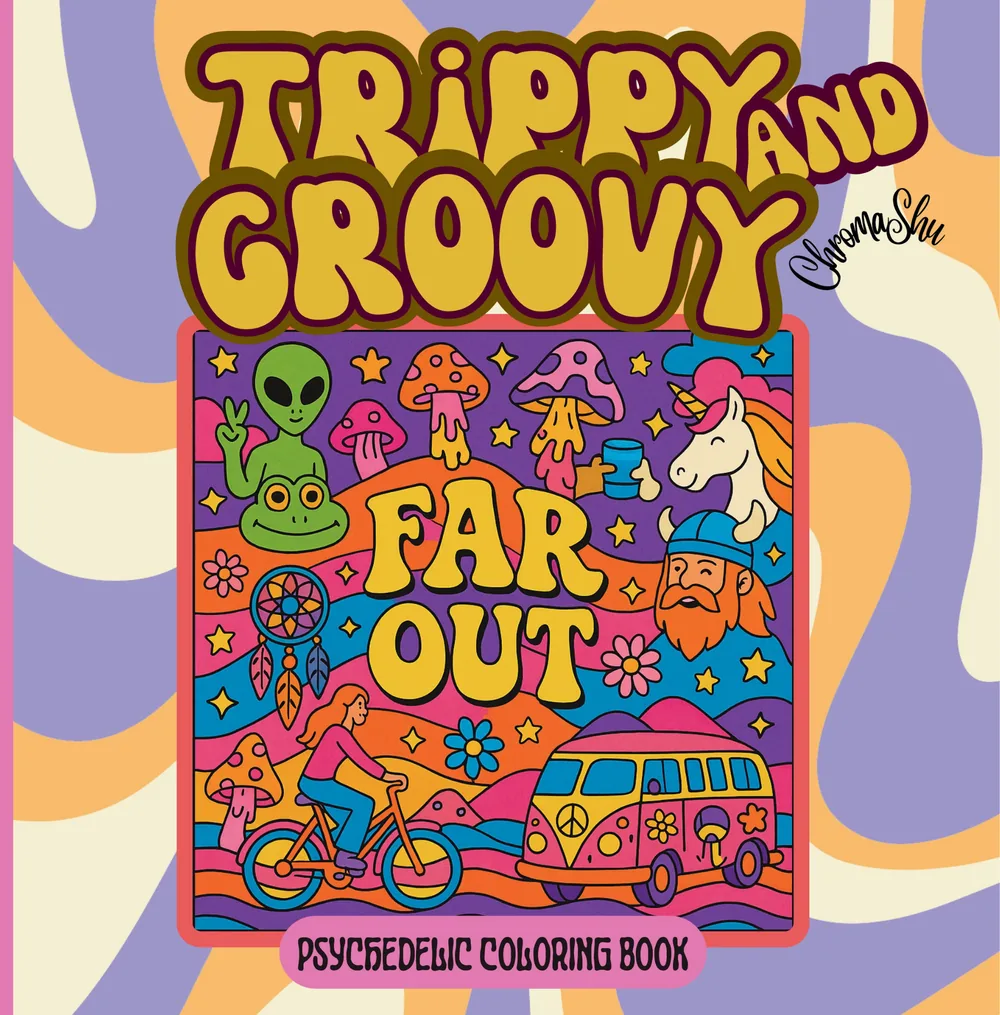
For a world of retro-inspired shapes, explore Trippy & Groovy. Choose a suitable group in your own page. The flowers used here are an invented example, not a reproduction of the book's interior.
Conceptual source: Getty's principles of design. The sequences and examples are editorial exercises from Equipo Chroma Shu.


Be the first person to leave a little trace of color here.