
Suggest metal without metallic pencils
Try light and dark bands on a small cylinder to suggest a metallic surface with pencils you already own.
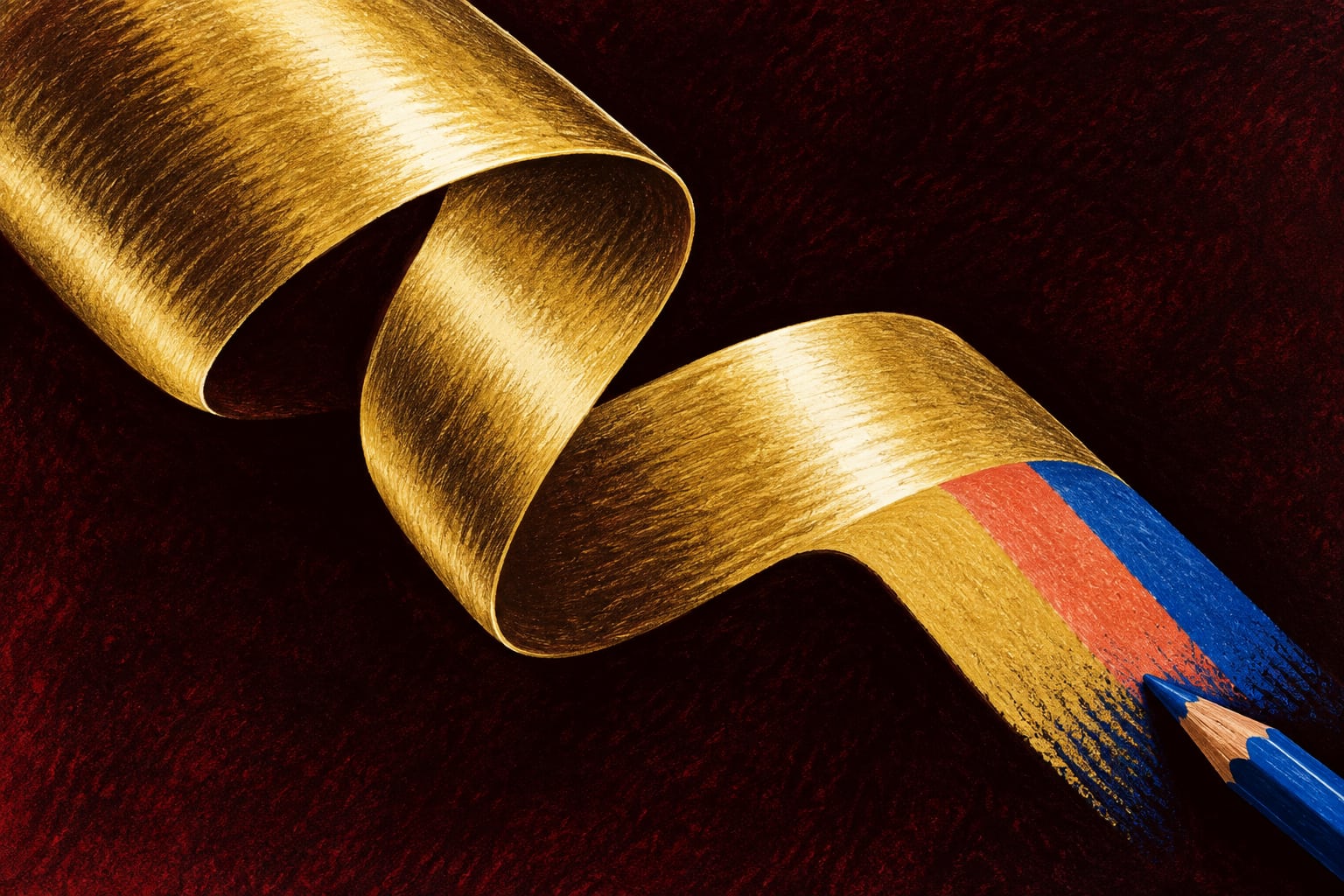
You can suggest a metallic surface by placing a narrow highlight beside a dark area and keeping a clear difference between them. Begin with a small detail and ordinary colored pencils. This exercise creates a drawn impression of shine; it will not give the paper an actual reflective finish.
A buckle, the rim of a planter, or an invented cylinder makes a useful subject. Choose a simple shape before tackling a whole suit of armor. It is easier to see what changes when you only have a few bands to work with.
Look at an object before choosing gray
Put a spoon or a metal container you already own near a window. Notice the very light areas, dark shapes, and any colors from the surroundings. Move the object slightly and watch its appearance change. Your drawing can simplify those relationships without copying every reflection.
Getty explains value as how light or dark a color is and describes smooth surfaces reflecting light. That provides a starting point for observation. The sequence below is our own practice exercise, rather than a formula that applies to every metal object.
Try a small cylinder
- Draw a small rectangle with curved ends on separate paper. Imagine a cylindrical piece viewed from the front.
- Reserve a narrow strip of untouched paper near one side. Keep it clear while applying the first color.
- Add a light layer of medium gray elsewhere, leaving room to adjust the darker areas.
- Place a dark band beside part of the reserved strip and a softer dark area toward the opposite edge.
- Join only some transitions with the middle gray. Keep one meeting of light and dark fairly crisp.
From silver to a golden detail
Make a second study with cream, ochre, and dark brown in the same positions. These are suggested colors for exploring a golden appearance. Replacing gray with yellow is only part of the exercise: check that the reserved paper, middle value, and dark accent remain distinct.
If the object looks like a flat decorative stripe, reduce the number of bands and look at the real object again. If it looks matte, try strengthening just one contrast. You do not need to darken the entire outline or make every edge black.
Mistakes that weaken the effect
- Softening every transition equally: keep at least one sharper meeting of values.
- Covering the white and expecting to recover it later: plan the highlight from the beginning.
- Adding too many reflected colors: start with one subtle color if you actually observe it.
- Applying the same pattern to every shape: a sphere and a cylinder call for different observations.
A common question
Do I need a white pencil for the highlight?
Not for this exercise. The main highlight is the paper you left untouched. If you already have a white pencil, you can test it separately, but do not rely on it to cover a dark layer completely.
Next, try the idea on a detail in a page you already own. Our guide to light pencil layers can help you approach the dark areas gradually.
Conceptual source: Getty's elements of art: value and texture. The cylinder studies and color combinations are original exercises from Equipo Chroma Shu.


Be the first person to leave a little trace of color here.